
Top Tire Projects That will land you a JOB ..No BS.
As students in this era, landing a job is no joke AI is evolving, robots are advancing, and automation is everywhere (okay, maybe we’re not completely cooked… yet), but the competition is real and average skills just don’t cut it anymore. Everywhere we look, people are building the same AI models, ML projects, web apps, and full-stack clones just to fill resumes and post on LinkedIn, and honestly, aren’t you tired of repeating what everyone else is doing? Another chatbot, another to-do app, another Netflix clone are we building to grow or just to show? It’s time to stop chasing trends and start creating something that actually builds us our skills, our mindset, and our real-world impact so traveler, if you’re ready to move beyond ordinary projects and work on something that truly matters, join us ahead.
1. Build A Tensor Engine
A Tensor Engine? What even is a Tensor Engine? Most AI and Machine Learning projects you see today are possible because of a tensor engine working silently underneath. A tensor engine is essentially a core mathematical library that handles tensors multi-dimensional arrays and performs the fundamental operations like matrix multiplication, gradients, and backpropagation that power neural networks. When you use frameworks like TensorFlow or PyTorch, you’re not building everything from scratch you’re standing on top of a powerful tensor engine that makes model creation possible. So how does building one benefit you? Most students focus on building models; this is about building the very core that makes those models possible. It forces you to deeply understand linear algebra, optimization, computational graphs, and how learning actually happens under the hood. Creating a tensor engine is one of the most advanced, difficult, and legendary projects a student can attempt.
Ratings:
Difficulty: ⭐⭐⭐⭐⭐
Learning: ⭐⭐⭐⭐⭐
Application: Memory Management,Optimization,Peak Level Coding


2.Build A Shader Engine

Shader Engine, something you’ve probably heard about, it’s what handles compiling and rendering the graphical side of a game, and yeah at first it might seem like overkill, but think about it, most people just build apps or websites that are copied, templated, or generated, nothing really stands out, this is different, this is where things get real, if you actually want to show your skills in a badass way this is one of those projects that forces you to level up, the learning curve is steep, the concepts feel almost cosmic at times, but that’s exactly why it matters, because you can’t fake it, you either understand it or you don’t, and if you do pull it off, it doesn’t just show what you built, it shows who you are as a developer
Learning Value: ⭐⭐⭐⭐⭐ (5/5)
This is one of those rare projects where almost every layer teaches you something real, you’re not just learning syntax, you’re understanding how systems actually work, from GPU pipelines to math like transformations and lighting, to low-level control through APIs like OpenGL or Vulkan, it forces you to think differently, debug deeper, and build patience, the concepts are tough and sometimes feel abstract, but once they click, your overall programming level jumps massively, this isn’t just learning graphics, it’s learning how to think like an engine developer]
Difficulty: ⭐⭐⭐⭐⭐ (5/5)
This is top-tier stuff, you’re dealing with GPU pipelines, math, low-level APIs like OpenGL or Vulkan, debugging is painful and nothing is straightforward, definitely not beginner-friendly.
Applications / Impact: ⭐⭐⭐⭐☆ (4/5)
Not something every company directly needs, but insanely valuable for:
Game engines
Graphics programming
Simulation systems
High-performance UI/rendering
Resources
Joey de Vries – LearnOpenGL
https://github.com/JoeyDeVries/LearnOpenGL.
This is the gold standard for getting into OpenGL, step by step from basics to advanced lighting and PBR.
TheCherno – Hazel Engine
https://github.com/TheCherno/Hazel
Real engine architecture in C++, includes renderer, shaders..
Overv – Vulkan Tutorial
https://github.com/Overv/VulkanTutorial
If you want pain + power → this is your entry into Vulkan.
bkaradzic – bgfx
https://github.com/bkaradzic/bgfx
Cross-platform rendering library, used in real projects, great to study abstraction.
google – Filament
https://github.com/google/filament
Production-grade PBR engine, heavy but insanely valuable to explore.
3.LLM Powered Smart Terminal
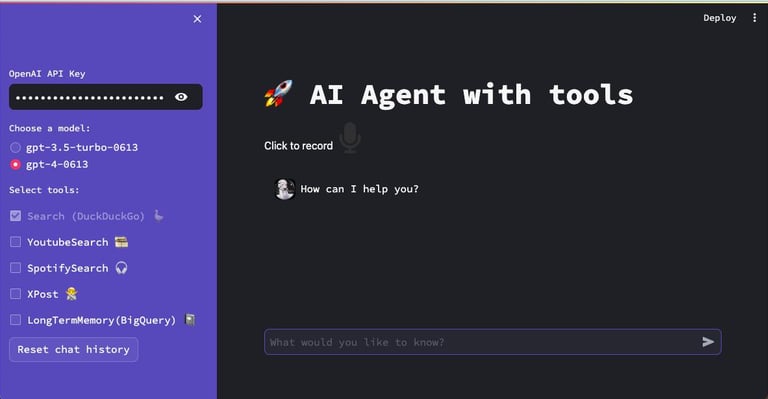
You must have heavily… I mean really heavily used AI like ChatGPT to the point where it almost feels normal. You ask something, it answers, done. Fast, clean, predictable. Almost too predictable. At some point it stops feeling like intelligence and starts feeling like just another tool. So I thought why not give it a break from being used like that? And that’s where this idea begins.
At its core, this system is still an LLM, nothing magical there. But the twist is we don’t just use it, we shape it. It’s trained and fine-tuned to match our wavelength: how we think, how we code, how we solve problems. Then we push it further with RAG pipelines, optimization, and better system design so it’s not just generating answers, it’s pulling the right context at the right time. This is where it stops feeling generic and starts feeling personal.
And then comes the terminal. Not just UI the experience. Whether it’s retro, raw, old-school, or something futuristic and polished, that choice is yours. But underneath, it becomes your interface to intelligence. You don’t just type commands, you interact. And yeah, this isn’t easy it’s not some API plugged into a random UI. This is a prototype of a real product. It takes time, effort, and a bit of suffering. But by the end, you don’t just finish a project you come out different. And the gap between those who’ve gone through it and those who haven’t… it’s dimensional.
Learning⭐⭐⭐⭐⭐ (5/5)
This project forces you to touch multiple domains at onceLLMs, retrieval systems, system design, and UI thinking. You don’t just learn how to use AI, you learn how it actually works under the hood and how to shape it. By the end, your understanding shifts from “user” to “builder”.
Difficulty ⭐⭐⭐⭐⭐ (5/5)
Not impossible, but definitely not beginner-friendly. The challenge isn’t just coding it’s connecting everything properly. Fine-tuning, RAG pipelines, latency optimization, and maintaining a clean system architecture all add layers of complexity. It’s less about writing code and more about engineering a system.
Application / Job Value ⭐⭐⭐⭐⭐ (5/5)
This is the kind of project that stands out instantly. It shows:
you understand modern AI systems
you can design beyond tutorials
you can think in terms of products, not just features
Strong signal for roles in AI, backend systems, and even product engineering.

4.High-Performance HTTP Server
You’ve definitely used the internet. Every app, every API call, every website you’ve ever opened all of it runs on HTTP. It’s so deeply abstracted now that most of us never even think about it. You hit a URL, something responds. Fast, invisible, predictable.
And that’s exactly the problem.
At some point, HTTP stops feeling like a protocol and starts feeling like magic. Frameworks handle it, libraries wrap it, and you just plug into it. So the idea here is simple: strip all of that away and build it yourself. Not a wrapper, not a framework a real HTTP server, from the ground up.
You start at the lowest level. Raw TCP sockets. Connections, buffers, streams. You figure out how a request actually arrives, how it’s parsed, how headers are structured, how responses are formed. Suddenly things like “GET /index.html” aren’t just strings they’re part of a system you control.
And then it grows.
You add routing. Then middleware. Then concurrency handling threads, async, or event loops. You deal with multiple clients, partial reads, timeouts. You realize performance isn’t automatic it’s engineered. Every decision starts to matter.
At some point, you stop thinking in terms of endpoints and start thinking in terms of flow. How data moves. How systems behave under load. How small inefficiencies scale into real problems.
This isn’t about replacing something like NGINX or Node.js. It’s about understanding why they exist and what problems they actually solve.
By the time you’re done, HTTP isn’t invisible anymore. It’s something you understand, control, and can reason about. And that changes how you build everything else on top of it.
Learning ⭐⭐⭐⭐⭐ (5/5)
This project forces you to understand the web at its core. Not frameworks, not abstractions the actual protocol. You learn networking basics, request/response lifecycles, concurrency models, and performance trade-offs. It shifts your thinking from “using APIs” to understanding how they’re built.
Difficulty ⭐⭐⭐⭐☆ (4/5)
Technically approachable, but conceptually deep. The challenge isn’t writing a server that works it’s writing one that handles real-world scenarios correctly. Concurrency, edge cases, and performance tuning add layers that push it beyond a simple project.
Application / Job Value ⭐⭐⭐⭐⭐ (5/5)
This is a strong signal for backend and systems roles. It shows:
you understand how the web actually works
..can work below abstraction layers
.. think in terms of performance and scalability
It’s directly relevant to roles dealing with APIs, backend infrastructure, and high performance systems. Even a well-built prototype stands out because most people never go this deep.
Write your text here...
Relax,Feel,Immerse
A blog filled with ancient knowledge .
Connect
© 2025. All rights reserved.