
Skipping the Cake: What It Really Means When Someone Avoids Celebrations
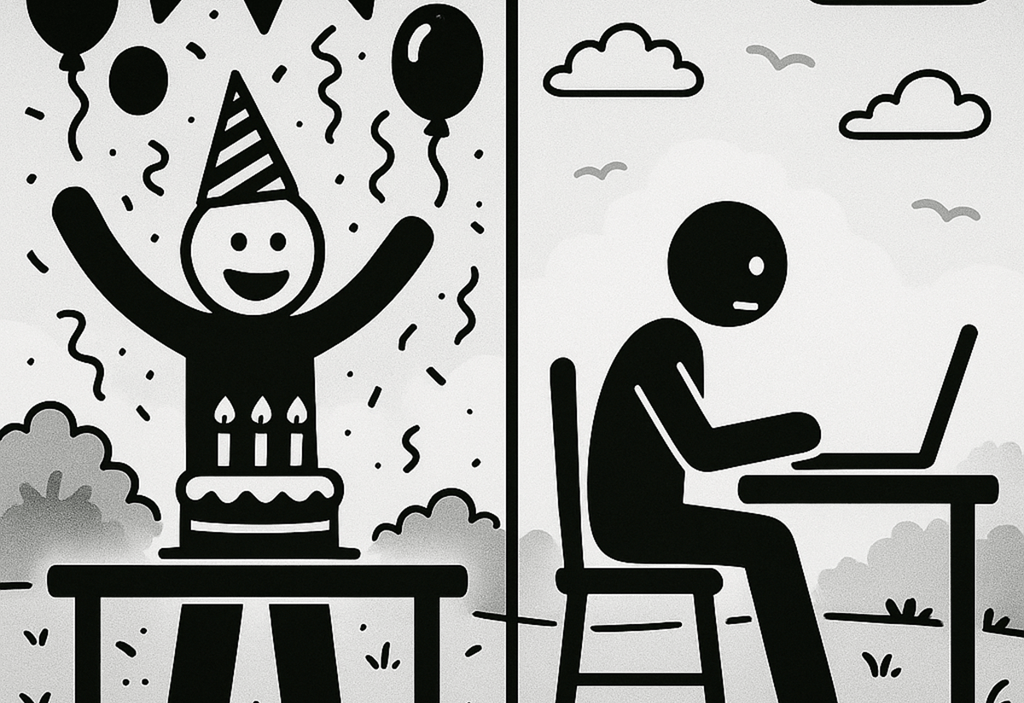
Birthdays one of the most loved days of our lives.
For many, it’s a reason to throw grand parties, cut huge cakes, and celebrate with everyone around.
Others prefer to keep it simple a quiet dinner, a peaceful evening, or sometimes, treating it like any other day.
So… where do you fall?
And what shapes the way you celebrate?
The Extroverts Celebration as Connection
As we grow older, that childlike excitement for big celebrations often fades. Yet, many still go all out throwing parties, cutting cakes, surrounded by laughter and noise. People in this category are often outgoing, full of energy, and find joy in being around others the classic extroverts.
But that’s not really our focus, is it?
The Busy Ones Celebration on Hold
For some, it’s simply workload.
They’re caught in the endless cycle of deadlines and responsibilities so consumed that they forget it’s even their birthday. It’s not that they don’t want to celebrate they just can’t.
Late nights, busy schedules, and constant pressure drain away the time and energy needed to make the day feel special.
Sounds a little sad, right?
But there’s more.
The Quiet Ones Celebration Rewritten
Another reason could be what we might call a childhood mechanism.
As kids, birthdays were magical balloons, cake, friends, excitement.
But not everyone grew up with that warmth.
Some had parents too busy to be there.
Some had friends who couldn’t come.
For some, no one really showed up.
And that quiet disappointment slowly shaped them. Over time, they stopped expecting much and later, stopped wanting much.
The Content Ones Celebration Redefined
But what about those who had wonderful birthdays as kids no workload, no loneliness and still prefer to keep things simple?
Well, that’s where psychology steps in.
To understand this, we turn to the Self-Determination Theory (SDT).

What Is Self-Determination Theory?
Developed by psychologists Edward Deci and Richard Ryan, SDT suggests that people are driven by three universal psychological needs:
Autonomy – the need to feel in control of one’s choices and actions.
Competence – the need to feel capable, effective, and skilled.
Relatedness – the need to feel connected and valued by others.
When these needs are fulfilled, people experience deeper motivation, inner satisfaction, and personal growth without relying on external approval or recognition.
How It Relates to Birthdays
People who prefer simple, quiet celebrations have often already satisfied these three needs.
They no longer crave “all the attention” or “unquestioned recognition.”
They know who they are and what truly matters to them.
A small treat, a walk with close friends, or even quiet reflection feels enough.
They’ve achieved autonomy celebrating on their own terms.
They’ve found competence confidence in who they’ve become.
And they value relatedness not through crowds, but through meaningful connections.
Their birthdays aren’t about being seen anymore; they’re about being.
A Different Kind of Celebration
None of these approaches big, small, or none at all are right or wrong.
They simply reflect where each person is in their journey of self-understanding.
Maybe the next time you see someone celebrating differently, you’ll pause before judging and instead ask why.
You might discover a story or a self that’s deeper than a birthday cake.
After all, how we celebrate says less about the day, and more about how we see ourselves.
So… where do you fall?
Relax,Feel,Immerse
A blog filled with ancient knowledge .
Connect
© 2025. All rights reserved.